Recognize the Risk Factors for Stuttering
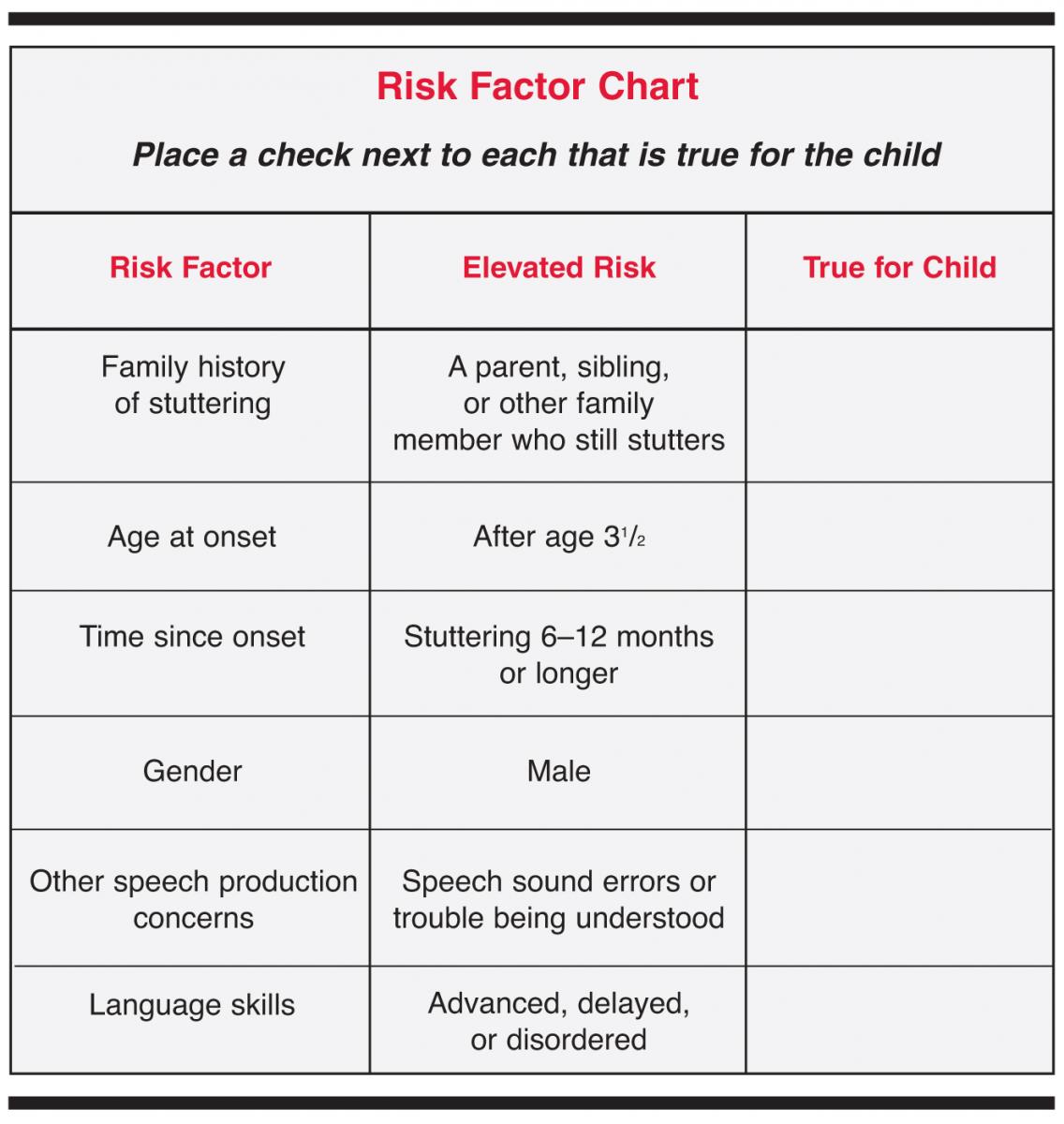 Certain factors may place some children more at risk for stuttering.
“Knowing these factors will help you decide whether or not your child needs to see a speech-language pathologist,” says Jane Fraser, president of the Stuttering Foundation.
The following risk factors will help parents decide.
- Family history. Almost half of all children who stutter have a family member who stutters. The risk that your child is actually stuttering instead of just having normal disfluencies increases if that family member is still stuttering.
- Age at onset. Children who begin stuttering before age 3 1/2 are more likely to outgrow stuttering.
- Time since onset. Between 75% and 80% of all children who begin stuttering will stop within 12 to 24 months without speech therapy. If your child has been stuttering longer than 6 months, he may be less likely to outgrow it on his own.
- Gender. Girls are more likely than boys to outgrow stuttering. In fact, three to four boys continue to stutter for every girl who stutters.
- Other speech and language factors. A child who makes frequent speech errors such as substituting one sound for another or leaving sounds out of words may be at greater risk.
“If a child has any of these risk factors and is showing some or all of the warning signs, a parent should be more concerned.” notes Lisa A. Scott, Ph.D., of The Florida State University. “They may want to schedule a speech screening with a speech therapist who specializes in stuttering. The therapist will decide whether the child is stuttering, and then determine whether to wait a bit longer or begin treatment right away.”
For free information on stuttering, contact the Stuttering Foundation at 800-992-9392 or info@stutteringhelp.org.
Another great resource: If You Think Your Child is Stuttering brochure.